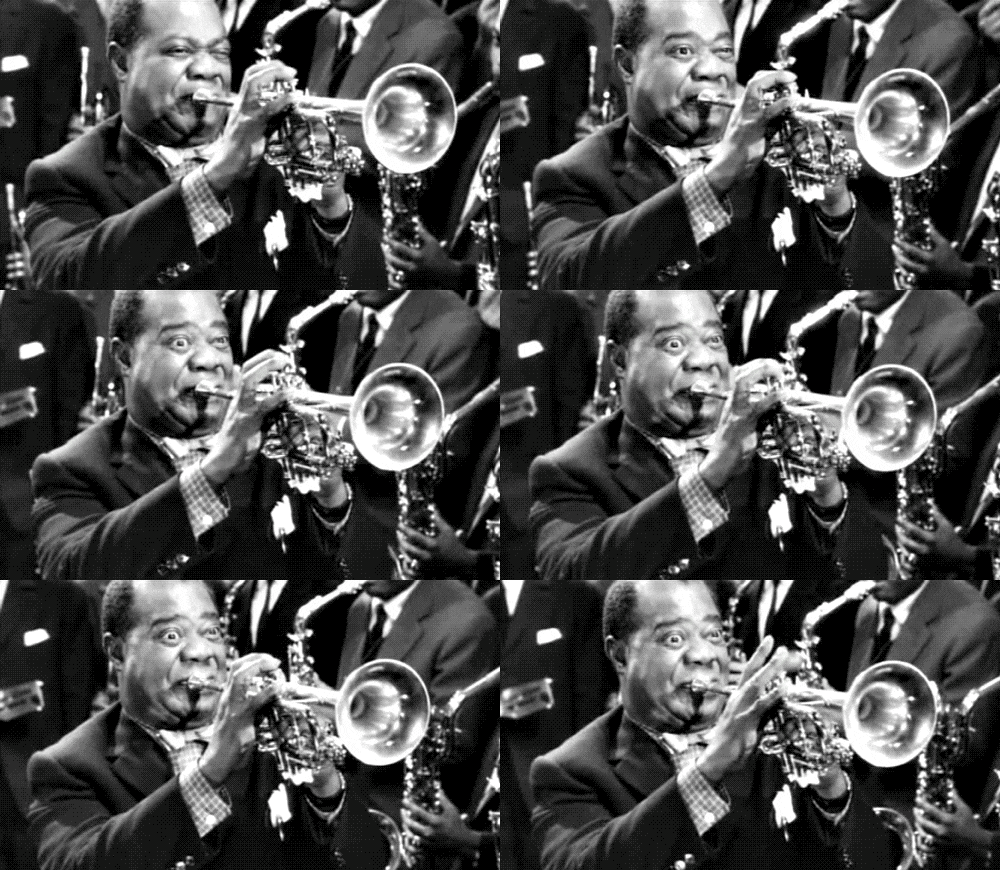
 While many know at least some of the music of Louis Armstrong, Duke Ellington, or Count Basie, they have done little more than listen to it. Few care enough about the process that resulted in the birth and popularization of jazz to do more than listen. However, this search for meaning in the musical cultures and traditions of the United States is the very quest of the humanities. While it is possible for anyone to gain some appreciation for the genre, it is the act of extracting meaning from layers of history, ethnicity, social interactions, literature, music, and art, that characterizes the humanities. A causal listening to jazz without the desire to extract meaning and build upon it understanding, cannot be called humanities.
This same idea is expressed by Stephen Ramsay. “Digital Humanities is about building things…” he says, “…if you are not making anything…you are not a digital humanist.” It is this line of “building” that few ever cross. It is crossed when consumption of culture gives way to the search for meaning. While the look and feel of digital humanities differs from that of traditional humanities, it’s end goal is the same. While traditional humanities examines art, literature, architecture, and music through personal study and experience with artifacts, digital humanities is capable of searching for this meaning on a larger scale, one which allows us to understand our personal experiences with cultural artifacts in the greater cultural landscape.
While it is important for students of the humanities to find meaning through personal experience, at the heart of the discipline is the need to build upon what has been said and done. Communicating meaning about culture does not end with the knowledge found in books. This meaning is continually built up as new technologies open doors to understanding about culture that were closed before. Jazz music is the product of many peoples’ experiences that developed into a democratic and improvisational outlet for oppressed peoples. It is the composite of many people’s experiences. Humanities in it’s broader sense is the same. Whether traditional or digital, the humanities is the process of building culture upon what has already been experienced.
Building a New Humanities
While many know at least some of the music of Louis Armstrong, Duke Ellington, or Count Basie, they have done little more than listen to it. Few care enough about the process that resulted in the birth and popularization of jazz to do more than listen. However, this search for meaning in the musical cultures and traditions of the United States is the very quest of the humanities. While it is possible for anyone to gain some appreciation for the genre, it is the act of extracting meaning from layers of history, ethnicity, social interactions, literature, music, and art, that characterizes the humanities. A causal listening to jazz without the desire to extract meaning and build upon it understanding, cannot be called humanities.
This same idea is expressed by Stephen Ramsay. “Digital Humanities is about building things…” he says, “…if you are not making anything…you are not a digital humanist.” It is this line of “building” that few ever cross. It is crossed when consumption of culture gives way to the search for meaning. While the look and feel of digital humanities differs from that of traditional humanities, it’s end goal is the same. While traditional humanities examines art, literature, architecture, and music through personal study and experience with artifacts, digital humanities is capable of searching for this meaning on a larger scale, one which allows us to understand our personal experiences with cultural artifacts in the greater cultural landscape.
While it is important for students of the humanities to find meaning through personal experience, at the heart of the discipline is the need to build upon what has been said and done. Communicating meaning about culture does not end with the knowledge found in books. This meaning is continually built up as new technologies open doors to understanding about culture that were closed before. Jazz music is the product of many peoples’ experiences that developed into a democratic and improvisational outlet for oppressed peoples. It is the composite of many people’s experiences. Humanities in it’s broader sense is the same. Whether traditional or digital, the humanities is the process of building culture upon what has already been experienced. 