As someone who has been close to others who have taken their lives due to depression and/or other mental disorders, the passage in this novel leading up to Septimus’s decision to end his life feels rather personal. I cannot claim to know, for no one can fully know, what is going through the mind of a person on the brink of such a decision, but, within the pages of a book, one can at least peer into the mind of the character through the author. On page 149 we read that Septimus “did not want to die. Life was good.”, but out of fear of the future treatment he would be receiving and the gears that had been proverbially knocked loose in his mind during one of the most awful wars in human history, he thought it better to not go on living anymore. Dr. Holmes was completely baffled by the decision and did not understand “why the devil he [had done] it” (page 150). Reading this from the perspective of the intended audience, someone living in the 1920’s, the knowledge about depression and PTSD were just simply not there in the way we have access to. It begs the question, if the unfortunate Septimus had the resources and treatment we have available to us today to combat these ailments, would he have resorted to the same demise? I would postulate he would have been much less likely to, but, looking at this novel and knowing that Bradshaw was doing what he knew to be best for him at the time, it begs another question: will we look back at the treatments of today and say the same things about the results? How is it possible to know how humane and proper our current practices are? They hindsight is twenty/twenty, but for me and my experience with others in similar situations as Septimus, this makes the present and future seem all the more blurred.
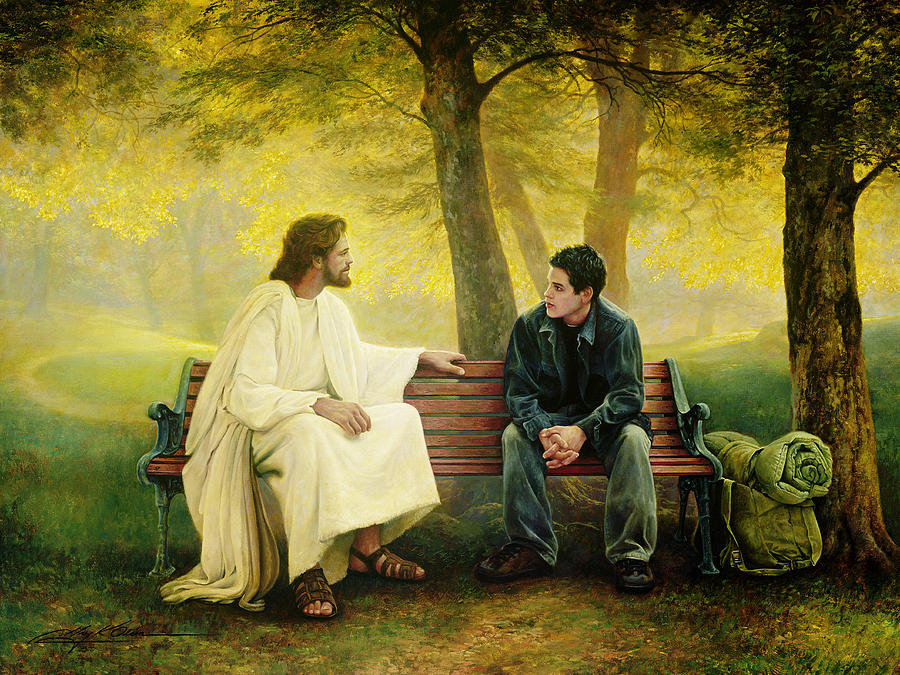
I included this image as the subject was a close friend of the painter and awhile after the painting was made committed suicide. The book itself does not have a lot to do with religion at all, but I associate this painting with inner pain and turmoil and thought it fit the message, and a some passages of dialogue in this book occur in or near a public park.
https://fineartamerica.com/featured/2-lost-and-found-greg-olsen.html
