Topic Models Created
- Cleaned-simple data, 10 topics, stopwords included, 1000 iterations, no optimization
- Cleaned-simple data, 20 topics, stopwords included, 1000 iterations, no optimization
- Cleaned-simple data, 15 topics, stopwords included, 1000 iterations, no optimization
- No stopwords data, 10 topics, no stopwords, 1000 iterations, no optimization
- No stopwords data, 20 topics, no stopwords, 1000 iterations, no optimization
- No stopwords data, 20 topics, no stopwords, 9000 iterations, 900 optimization interval
- Cleaned-simple data, 15 topics, stopwords included, 9000 iterations, 900 optimization interval
We chose to use the 7th topic model we created. We felt that 15 was a good number of topics and that the inclusion of the stop words added a clarity to the results. Inclusion of stop words guarantees that no data is lost. We also chose to use 9000 iterations in order to refine the topics best as possible.
Semantically Evident and Opaque Topics
This topic model has both semantically evident and semantically opaque topics. Aside from the “English language” topic, which groups together many of the stop words, one semantically evident topic, which we named “nature,” stood out. It is listed as follows:
bird sea big weasel egg shape fish bite gate bang rose except sue great petals fly suck cross grass slurp
This topic was easy to identify because of the amount of words it contained that related to the outdoors and animals. The topic not only lists animals, but actions that are performed by animals, such as “bite” and “fly” as well as other related words like “egg.” In addition, nature words like sea and petals show the surrounding in which these animals are found.
Another semantically evident topic is one that we labeled “the sea.” The words in this topic model are listed here:
his beneath body upon above moll seas somewhere hair start dolphins mention perfect weather may pearl darling sick tremble further
This topic was not as easily identifiable as the “nature” topic, because there are more words in this topic that seem to not be directly related, but there was a strong enough theme revolving around “sea” words that it seemed like the most prominent topic in this group. Words such as “seas,” “dolphins,” “weather,” and “pearl” clearly relate to the sea and physical words such as “body,” “hair,” and “tremble” may point toward poems that explore human interactions with the sea.
Topic 2 was a semantically opaque topic. While some pairs of words seem to be related to each other, there was not an apparent theme among the whole set.
say miss does give unless church says bread green brought perhaps has pink maiden soil something help been possible living
Some words in this topic group denote religion, including “church” and “bread,” some could relate to nature, including “green” and “soil,” but there doesn’t seem to be much of a theme beyond these words that ties the whole group together.
Another semantically opaque topic from this model is topic 6.
its woke river bowl dusk sit glass spoon thin wall apple pressing clothes looking strangers moments gently dawn perfect prayer
This topic group contains words that talk about food, place, nature, religion, and personal interaction. There is not one clear topic that ties these words together, but it is easy to understand why some of the words would be used together, such as, “pressing” and “clothes” and “bowl” and “spoon.”
Visualization
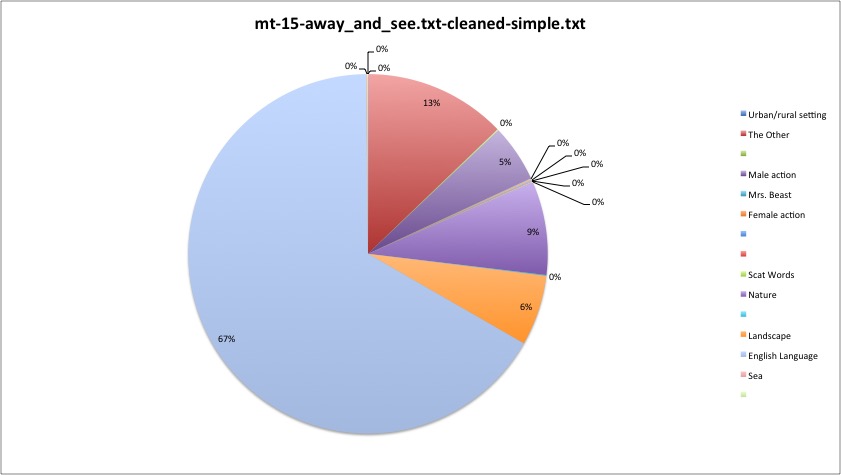
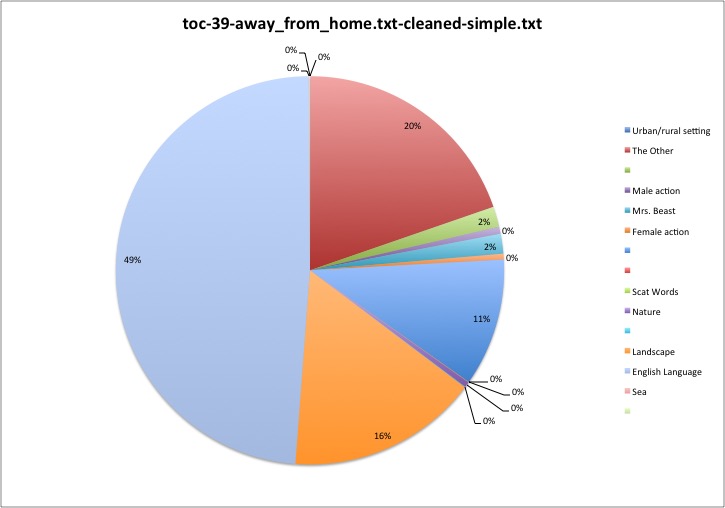
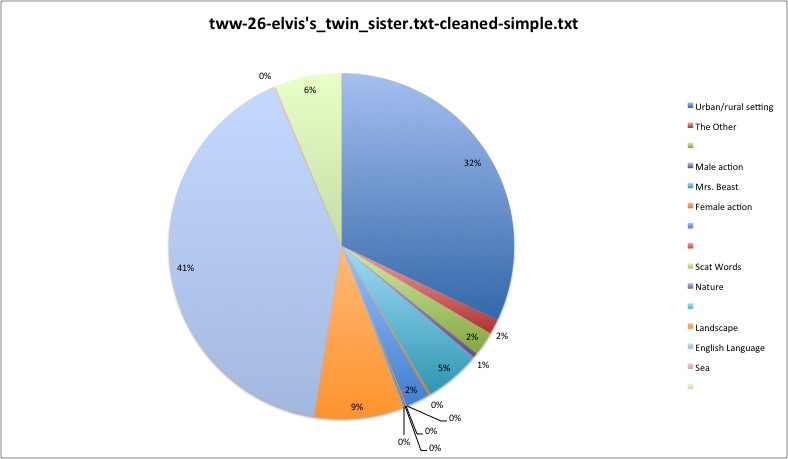
Observations
After spending weeks analyzing our poetry by hand, topic modeling gave us a new perspective on the different perspective on the themes and language present throughout Duffy’s poetry. There were a number of surprises as well as expected outcomes in the topic modeling. For example, in topic 3, which we dubbed as the “male” topic, the first ten poems are from The World’s Wife. Upon reading the book, it is often clearly about male/female relationships. The World’s Wife also is noticeably absent in the first thirty slots of the topic “English language.” Because the poems in this book of poetry constructed in a more narrative style, it makes sense that there would be fewer words that deal directly with language. In the other books of poetry, the actual meanings are built off the use and precision of otherwise very “normal” words.
There were some surprises that came from the topic modeling. We labelled one topic (number 4) as a topic totally about “Mrs Beast” from The World’s Wife. However, when we looked at the compositions of the individual poems, “Mrs Beast” was actually second. “Poker in the Falklands with Henry and Jim” from Standing Female Nude came in first. While both poems deal with poker, we hadn’t previously recognized a relationship between the two poems until seeing them side by side in the same topic. Another surprise was that our topic titled “the other” didn’t see any poems from The World’s Wife until the sixtieth spot. While it’s a theme we had identified by hand as we analyzed the poetry, the topic model returned different conclusions. This example, as well as the other examples mentioned, demonstrates how both human and machine learning can help to discover meaning where the other might miss it. Doing the topic modeling has helped us especially find many cases where The World’s Wife is noticeably different from Duffy’s other books of poetry.
Created by Chris Dichmann, Maddie Calder, McKinsey Koch, and Lorin Groesbeck
